ADUs are often described as a gentle way to add housing. One property becomes two homes, and the neighborhood may barely look different. But I keep wondering what happens when we zoom out. What if this idea actually succeeds at scale?
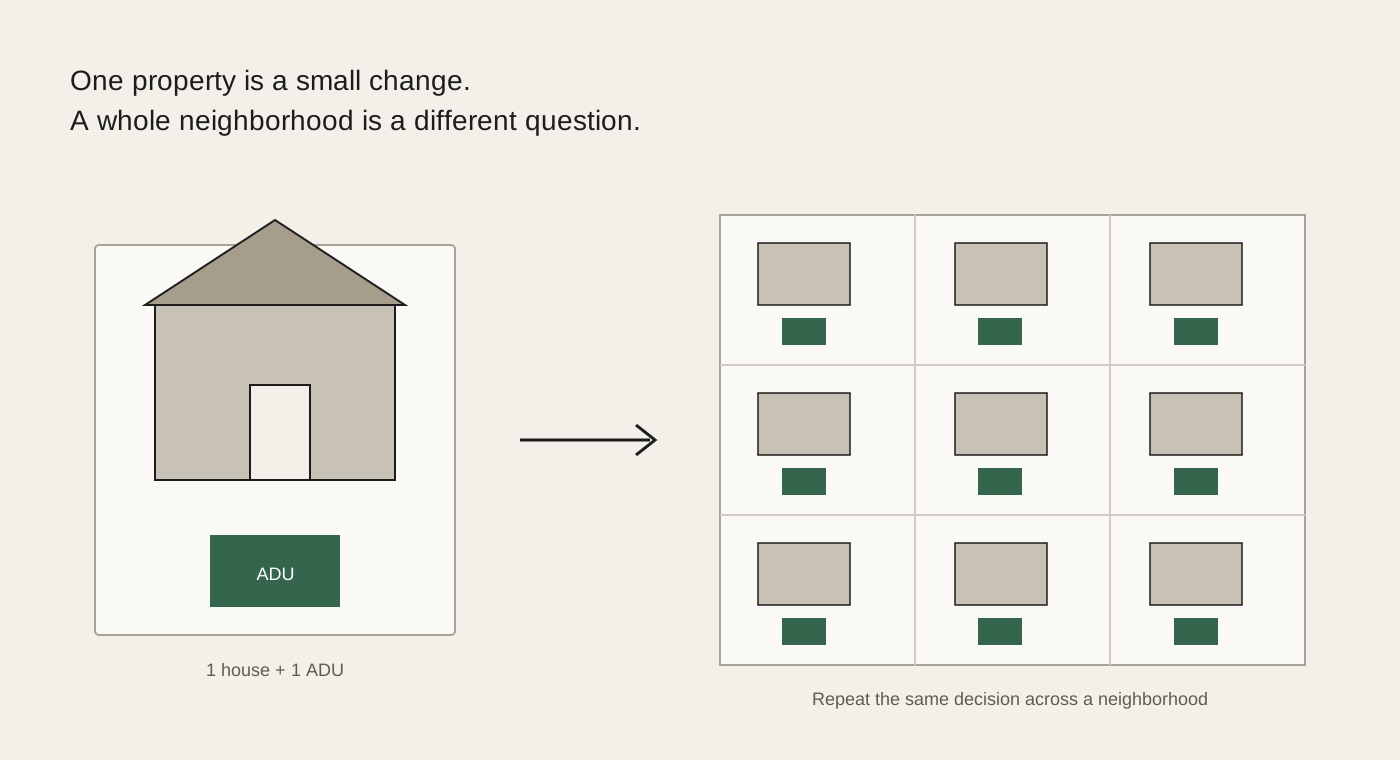
One ADU is small. Thousands are not.
On an individual lot, an ADU can feel almost invisible. A basement becomes an apartment. A garage becomes a home. A small structure appears in a backyard. There is no tower and no dramatic change to the skyline.
That is part of what makes ADUs appealing to me. They create density differently. Instead of one large development adding hundreds of apartments at once, growth happens through thousands of small decisions made by individual households.
But cities operate through accumulation. One additional kitchen and bathroom may be insignificant. Repeat that decision across an entire neighborhood and it becomes a different condition.
So what happens to everything around the house?
This is where I think the ADU conversation becomes more interesting than a zoning question.
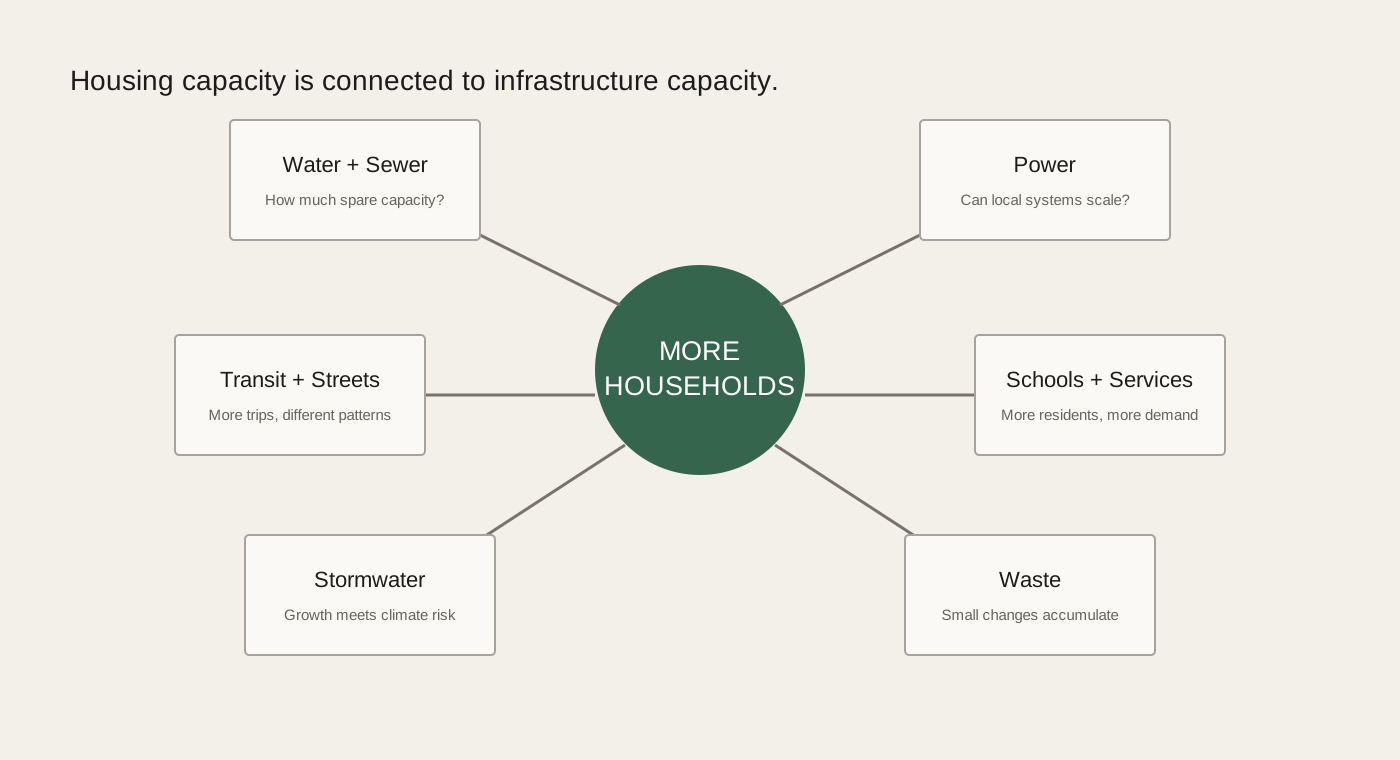
Many neighborhoods that could accommodate ADUs were planned around relatively low residential densities. Water, sewer, power, streets, schools, transit, sanitation, and other services all operate with assumptions about how many people live there.
If thousands of properties gradually add another household, how much spare capacity already exists in those systems?
Some neighborhoods may absorb the change easily. Others may already be dealing with overloaded sewers, limited transit, electrical upgrades, flooding, or other infrastructure constraints. The answer is unlikely to be the same everywhere in New York.
Maybe ADU capacity should not only be measured lot by lot. Maybe it should also be understood neighborhood by neighborhood.
Housing capacity is only half of the story.
When we ask how many ADUs New York City could accommodate, the first instinct is usually to count eligible properties. How many yards have enough space? Which basements could become apartments? Which garages could be converted?
Those questions tell us something about housing capacity. They do not necessarily tell us how much additional growth a neighborhood can comfortably support.
I do not think this is an argument against ADUs. To me, it makes them more interesting as a planning question.
If the city wants incremental housing growth, perhaps infrastructure investment also needs to become more incremental and more geographically specific. A neighborhood that is capable of adding hundreds of homes may need a different set of improvements from one capable of adding only a few dozen.
What if we planned for success?
New York often talks about housing through large developments and rezonings. ADUs suggest another model, where the city changes slowly, one property at a time.
That kind of growth is easy to underestimate because it does not arrive as a single project. But if it works, the cumulative effect could be significant.
So the question I keep coming back to is not simply how many ADUs New York can legalize.